Downers Grove, IL · Garage Door Service
Garage door repair and replacement for Harwood Heights, IL homes built mostly in the 1960s. Downers Grove Garage Door Pros travels the 16 miles to get to you.
Half the houses in Harwood Heights went up around 1967, which is five years earlier than the 1972 median for the wider service area we cover out of Downers Grove. That gap matters more than it sounds. Doors installed in the mid-to-late 1960s tend to run on lighter-gauge track and shorter torsion tubes than what went into homes built even a decade later, and a lot of those original setups are still hanging on because nobody's had a reason to touch them.
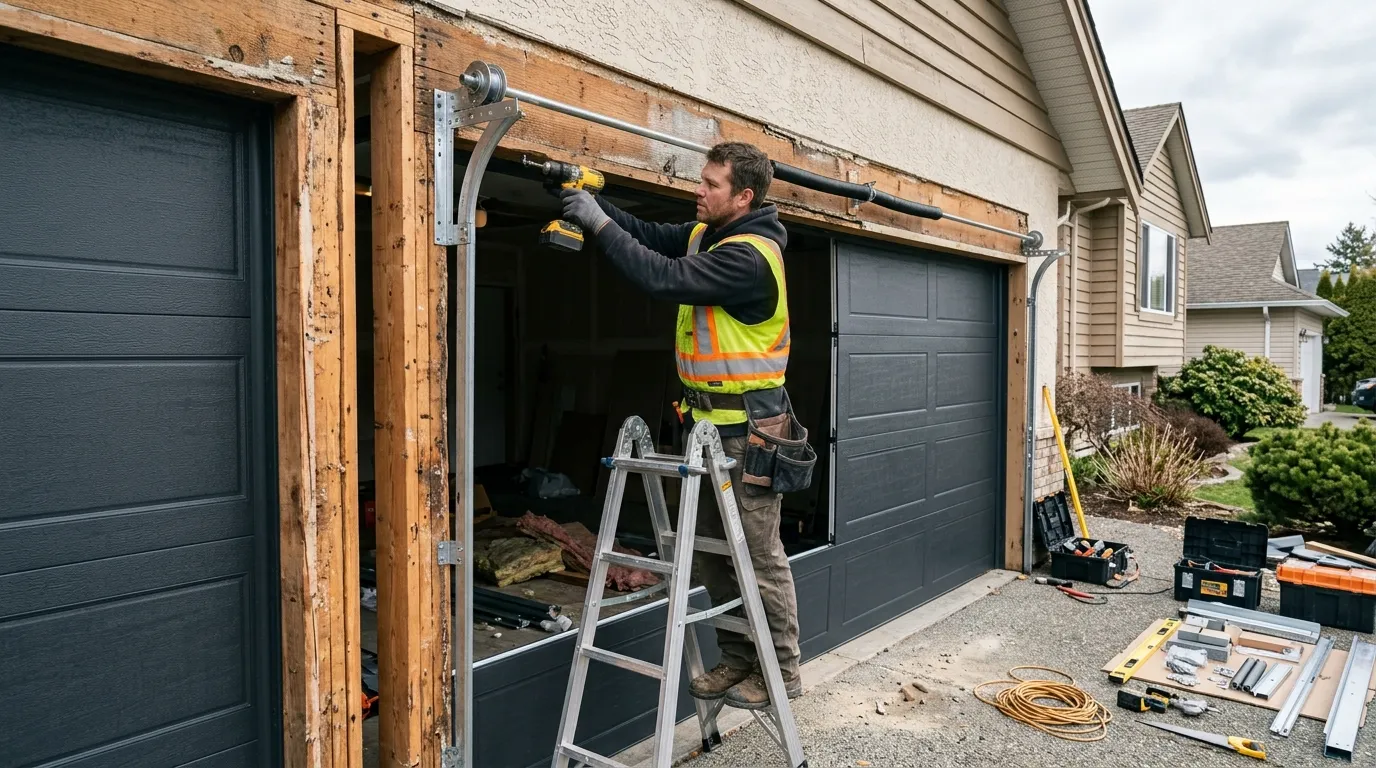
What we see most in this pocket: single-layer steel panels with no insulation, torsion springs sized for lighter doors that homeowners later swapped for heavier insulated ones without upgrading the spring, and openers that have been replaced two or three times while the track and hardware never were. None of that means the door is due for replacement - plenty of that hardware still does its job. It means when something breaks, the fix has to match what's actually up there, not what a big-box store sells off the shelf.
We won't guess at your spring size or track width over the phone. That's a look-and-measure job, not a phone-quote job.
Not every block in Harwood Heights dates to the same stretch of years, even with a tight median like 1967. The earliest pockets carry the original one-piece or early sectional doors on side-mounted hardware, the kind that needs a specific spring style most trucks don't carry as a default stock item. Later infill and rebuilds nearer the edges of town tend to run newer sectional doors with center torsion springs, which is the layout most techs are set up to service on the first visit.
The practical difference shows up at the point of repair. A torsion spring for a center-mounted setup is a same-visit part on most trucks. A side-mount system on an older one-piece door sometimes means a callback once we've confirmed the exact spring wind and diameter, because that hardware isn't something every supplier stocks. We'd rather tell you that up front than promise a fix we can't finish in one trip.
If you're not sure which category your door falls into, the giveaway is usually how the door opens - one solid panel that swings out and up is the older style, versus panels that fold and roll back along the ceiling track.
Harwood Heights sits inside a climate band the federal data classifies as cold, moderate - enough winter swing that steel contracts, hinges stiffen, and non-insulated panels flex more than owners expect on the coldest days. Combined with a median build year of 1967, a lot of what's original to these houses is steel without a foam core, on hardware that predates the double-strand cable setups now standard on new installs.
That combination - older steel, no insulation, cold-weather cycling - is why springs here tend to fail in winter more than summer. Cold steel is less forgiving, and a spring that's been slowly losing tension for a year will often let go on the coldest morning of the season, not the mildest one.
We don't push insulated replacement doors on every call. If your panel is solid and the only issue is a broken spring or a bad roller, fixing what's there is usually the right call financially. Full replacement makes sense when the steel itself is dented, rusted through at the bottom panel, or the door is enough decades old that parts are getting hard to source - not just because a newer door exists.
Harwood Heights runs about sixteen miles from our shop in Downers Grove, which puts it toward the outer edge of where we schedule same-day work. We don't keep a depot or a second crew stationed out this way - every truck that shows up at your door made the same drive from Downers Grove that any other call in this direction does.
With 3,582 households in Harwood Heights, it's a smaller, denser area than a lot of what we cover, and that density means jobs here tend to cluster by street once we're out. If we're already headed your way for a nearby call, we'll say so when we're setting your appointment, since it sometimes moves your slot earlier in the day.
Be upfront with us about the drive when you call - sixteen miles means we plan the route into the schedule rather than treat it as a quick add-on between local jobs. That's not a complaint, just how we set expectations so the arrival window we give you actually holds.
Because spring size, wind direction, and mounting style all depend on the door and track that went in originally. Harwood Heights houses built around the 1967 median often carry lighter hardware than homes built a decade later, so a generic big-box spring can be the wrong size even if it fits the mounting holes.
No. We run out of Downers Grove, about sixteen miles away, and every truck that comes to Harwood Heights makes that drive. We're upfront about that distance when scheduling so we can give you a realistic arrival window instead of a same-hour promise we can't keep.
Depends on the door. If the panel is solid and the problem is a spring, cable, or roller, repair is usually the cheaper and faster path. Replacement makes more sense once the steel is dented or rusted through, or the hardware is old enough that matching parts is getting hard to find.
Yes, more than summer. Harwood Heights sits in a cold, moderate climate band, and steel contracts and hinges stiffen with the temperature swings. Springs that have been slowly weakening tend to finally give out on the coldest mornings rather than during mild weather.
Call now or request a free quote - same-day service on most repairs, upfront written pricing.